Wednesday, October 20, 2021

Hope and Faith


And hope does not put us to shame, because God’s love has been poured out into our hearts through the Holy Spirit, who has been given to us. New Romans 5:5 

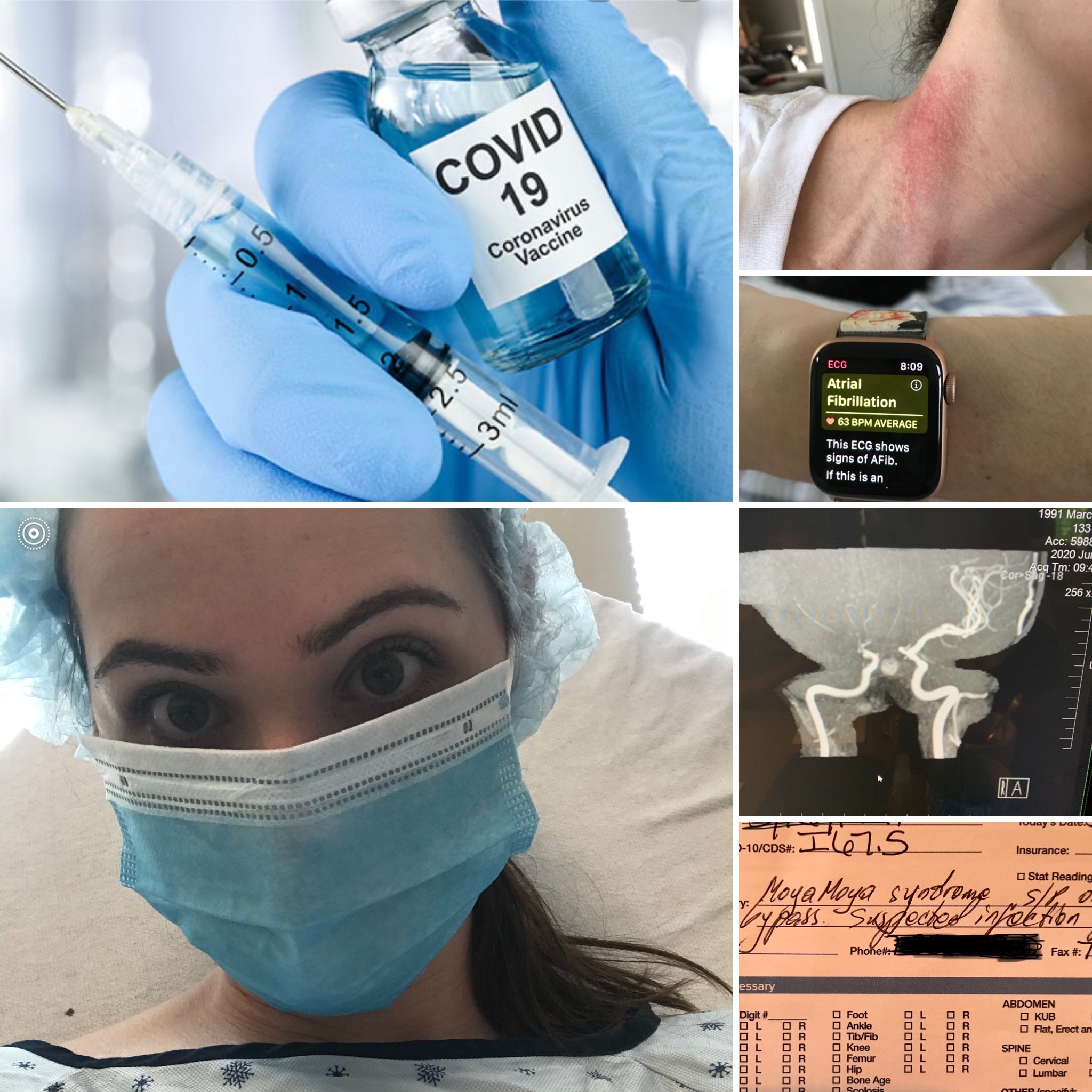
Five years ago, my daughter came home from a cruise and couldn’t shake her sea legs. Vertigo turned into severe fatigue, tremors, mental confusion, and difficulty standing and walking normally. She went from leading an independent life as a single, working mom who had just invested in her first condominium to needing to move back in with us while she took extended medical leave. We struggled to get a diagnosis locally and decided to take her to Mayo Clinic in Jacksonville with the hope that they would diagnose and treat her. Two days after arriving at Mayo, our hope was tested when she received a life-changing diagnosis of moyamoya, a rare, progressive and incurable disease that can cause transient ischemic attacks (TIAs), strokes, seizures, tremors, movement disorders, cognitive impairment, headaches and other neurological symptoms. 

Despite the diagnosis our hope lived strong. God had opened the door to a diagnosis; surely, He would open the door to healing. Brain surgery was the intervention that the internet revealed would allow her to lead a “normal” life. We went into our first surgery with high hopes fueled by prayers from around the world. Five years later, my daughter has been hospitalized 17 times, had four minor and five major surgical procedures including two brain surgeries. She is scheduled for a 10th surgery next month. 

There is a cumulative pressure that builds when life expectations go unmet. The “whys” become loud; the disappointments gain power; pain grows with each unanswered prayer. As time passes, it feels easier to guard our hearts from hope, than live with unmet requests. 

This past year has proven to be one of my daughter’s most challenging. She has been struggling with uncontrolled pain, hospitalized three times for breathing issues and is fighting a chronic infection. The rollercoaster ride has been steep and deep. Each visit to the hospital began with hope. As specialist after specialist indicated they did not hold the expertise my daughter needed to safely treat her, each departure left us feeling hopeless and hurting. Pain is a powerful motivator, but it doesn’t always lead us in the right direction. At some point over the last year, I stuffed hope in a drawer thinking my load would be lighter. 

But that action has not served me well. Hope is where Faith begins; Faith is where our strength to endure lives. When I put my hope away, I picked up disappointment, frustration and anger. In trying to lighten my load, I ended up increasing my burden. 

It is hard to unlearn a response driven by pain, but I am working on it. I am scattering seeds of hope each day through daily prayer and gratitude. I am watering those seeds by looking for God’s miracles. I am fertilizing them with the assurance that God’s love for my daughter exceeds my own.


Saturday, July 31, 2021

Will you take up the sword?


There is no greater love than to lay down one’s life for one’s friends. John 15:13

My daughter is a unicorn. She is diagnosed with a rare disease, moyamoya disease, said to impact fewer than 1 in 100,000 people in the United States. Within her rare disease group, she is in a smaller subset of patients who have had a surgical failure. Within that group, she is in an even smaller group to have received a rescue surgery known as the omental bypass to the brain. Within the omental bypass group, she is the only known patient to develop a granuloma (tissue mass) within her omental bypass.

My daughter sees a total of eight specialists affiliated with five hospital systems in Virginia, California, and the District of Columbia. The difficulty with managing care across a geographically dispersed team is achieving cross-specialty collaboration and team consensus. In a normal setting this is challenging. With the backdrop of COVID (overflowing emergency rooms, reduced staffing, pressured medical professionals, limitations on non-emergent but critical services, delays in testing), this has been almost impossible.

The vaccine brought a huge sense of relief.  As part of the most vulnerable population, it not only offered our daughter a chance for increased protection, but it meant a return to medical business as usual. As vaccinations picked up, cases began dropping; hospital beds, emptying; appointments increased; non-emergent services reopened. And then vaccinations stalled. Delta took hold. ERs filled up again. Our relief quickly turned to frustration.

If you are still on the fence about getting a vaccination (and not precluded from taking the vaccination for health reasons), I am asking you to read a little further. The truth is, while I do not fully understand your hesitancy, I do not want to be dismissive of your concerns. There have been more than 338 million vaccinations distributed in the United States to date. Historically complications from vaccinations develop within the first two months of administration. We are eight months into emergency authorization. The data overwhelmingly supports there is a lower risk of developing a serious complication from taking a vaccination than from contracting COVID.

I am not here to persuade you to get a COVID vaccination based on a risk argument, however. Statistics do not protect us; they only comfort us. If you are the person who falls on the wrong side of a statistic, the data means nothing. What I want you to understand is your decision not to vaccinate has tertiary impacts; those impacts cause harm to others. As long as large numbers of people remain unvaccinated, the medical system will remain overwhelmed; critical resources needed by other patient groups (rare disease groups, cardiac patients, cancer patients, diabetes patients, etc.) will get diverted; new variants will develop that are more virulent, more contagious, and resistant to the current vaccinations. In the face of a large population of unvaccinated, the country remains vulnerable to resurgence.

I come from a military family. My grandfather, father, husband, and son-in-law all served in combat. They and soldiers like them, unhesitatingly, took on risk to ensure the safety of others. We are in a war against this virus. Vaccinations are our most effective weapons. We need more soldiers. Will you take up the sword?


Monday, July 12, 2021

Seeing Through God's Light

Still, what I want in my life
is to be willing
to be dazzled—
to cast aside the weight of facts

and maybe even
to float a little
above this difficult world.
I want to believe I am looking

into the white fire of a great mystery.
I want to believe that the imperfections are nothing—
that the light is everything—
that it is more than the sum
of each flawed blossom rising and fading. And I do
.

from “The Ponds” by Mary Oliver

A friend posted this section of a poem on Facebook. It speaks to my heart.

I want to be this person, the person who finds the glory in my story.

The truth is five years into my daughter’s life-altering diagnosis of moyamoya disease, there are many days I struggle to see past the world’s imperfections. The weight of what I cannot give her feels overwhelming. My joy tethers to her wellbeing. Life has taught me bad things happen, and fear can win my day.

Last week my husband and son-in-law built a magnificent tree house for my seven-year-old grandson. It is a little over six feet off the ground nestled between two trees with a sturdy ladder that attaches to the frame. It sports a large opening at the top of the ladder as a doorway and a window he can stand at to survey his world.

I smiled as my grandson climbed happily into his new home. Then I noticed there was no handle at the top of the stairs for my grandson to steady himself as he pulled himself over the threshold into the house. My eyes darted next to two small cement steppingstones that were being used to stabilize the ladder at the bottom of the six-foot drop. My head flashed to pictures of my three grandsons wrestling in the tree house, a favorite past time. From there my thoughts shifted to my youngest grandson being knocked out of the doorway, falling to the ground and hitting his head on the small cement paver at the base of the ladder. Joy had left the building. As we headed home that day, my head and my heart were churning.

At what moment, did fear become my lamppost? When did I become so focused on the safety net, I missed the show taking place above?

Was it the day the plane hit the Pentagon floors below the office where my husband was working? Or the day my oldest daughter had a seizure while snorkeling on a family vacation? Was it the moment I learned my 40-year-old brother-in-law’s heart stopped forever after making a goal in a soccer game? Was it the moment I read the words, incurable, progressive disease causing strokes, or the subsequent ten-hour wait in a hospital lobby during my daughter’s first brain surgery? Was it the day we learned she had her first stroke?

At some point, I started focusing on the flaws in my story and lost the dazzle in my story. At the heart of this poem lives an undeniable truth. Life is hard. No one is immune to life’s “imperfections,” but the power we give them in our lives is a choice. I haven’t been choosing so well lately.

I want to be the person who sees the world through God’s light and not through my fear.

And I do.


Friday, November 27, 2020

A COVID Thanksgiving

Thanksgiving is my daughter’s favorite holiday. As a military family, we were rarely able to travel home to spend the day with family, so we recreated our home by inviting other military families and soldiers to share our table. These friends became what we lovingly refer to as our Army family. They are by far the best byproduct of my husband’s 26-year Army career and the number one reason my daughter relishes Thanksgiving.

Thanksgiving looked a little different for us this year. Instead of a table for 25, we enjoyed a prime rib dinner for three. We will enjoy turkey together on another day. As with the rest of the world, our Thanksgiving tradition is just one of many things that has been impacted by COVID. While COVID has been hard on everyone, it comes with extra challenges for my daughter. 

For those who may not know my story, my daughter has a rare, chronic, progressive brain disease, moyamoya (MM). It causes narrowing of the arteries in her brain which chokes off necessary blood supply. Symptoms can include strokes, transient ischemic attacks (TIAs), seizures, headaches, tremors, movement disorders, anxiety, depression, cognitive issues and fatigue. In and of itself, her disease does not make her more prone to catch COVID, but it does place her at higher risk for complications. Because she has developed secondary impacts to her adrenal glands and thyroid from her MM, her risk for complication is further magnified. Just prior to the pandemic, she caught the stomach flu and ended up hospitalized for four days. 

What has the pandemic looked like for my daughter and many other chronically ill Americans? 

Hypervigilance around masking, social distancing and hygiene. Strict protocols and limitations around all in-person interactions including trips to stores, pharmacies and doctor’s offices. She and those who love her have to remain in constant risk evaluation mode. Is X social distancing or are they posting pictures on social media that show otherwise? Does Y advocate for wearing masks or do they bemoan them? Is a trip to the store necessary? Can anyone else go? Are people wearing masks walking into the store? How many people are inside the store? Can I manage my symptoms virtually from home? Do I need to delay my annual MRI/MRA to check for progression? Should I delay testing my cortisol levels? Can we afford the risk of sending my son to school in person? 

Increased anxiety around medical supply chain disruptions. As a patient with adrenal insufficiency, she does not produce cortisol, a hormone that is necessary to survive. Without her daily replacement medication, hydrocortisone, her body will eventually go into an adrenal crisis, the number one cause of death in adrenal insufficient patients. Hydrocortisone is used to treat inflammation, autoimmune diseases and other medical conditions in addition to adrenal insufficiency. With the onset of COVID, one supplier stopped producing the medication creating a shortage in the marketplace. This placed her and many other patients in harm’s way while the pharmacies sorted out how to prioritize the medication for those who needed it critically. The realization that her life depended on the ability to get a medication in short supply was sobering. 

To complicate matters, as people delayed non-urgent medical appointments, prescription demand slowed. Pharmacies stopped placing daily medication orders. Shippers started reducing staff, and shipments started taking longer to get to pharmacies. Insurance regulations, however, did not change. You are only allowed to fill prescriptions within a certain window of when your prescription ends. Pharmacies will not order before the insurance approves the medication. This has led to multiple instances of gaps between one prescription ending and the refill arriving. 

Neurofatigue took on new meaning when it came to having to parent 24/7 without the breaks that in-person school provided. Stepping into the role of teacher’s assistant has escalated the problem. Her exhaustion levels are extreme. Cognitively, it is amplifying memory and processing challenges. Her neurologist decided to prescribe home health care support, but after conferring with her neuroendocrine doctor, became more concerned about the risk of bringing the virus into her home. Ultimately, he has added an additional medication used by patients with MS to combat neurofatigue. 

These are just a few of her daily challenges. By far the hardest thing she has had to deal with during this pandemic are her feelings about the people who do not believe COVID presents a problem. Those who deny the need to wear masks; who argue against social distancing measures; who point to 98 percent survivability statistics to justify their views;  who argue that a two percent death rate is an acceptable loss, so they can continue to feel normal. It is hard not to see herself in those comments as the sacrificial lamb to another person’s comfort. 

I believe in my heart that if people put faces to the numbers, these arguments would die a quick death. I am asking you to please read the virtual booklet below. It was created by two moyamoya patients and their families to raise awareness by sharing patient stories. Each of these individuals is at higher risk for complications. Each of these patients deserves our protection. 

https://l.facebook.com/l.php?u=https%3A%2F%2Fwww.flipsnack.com%2Ffacesofmoyamoyadisease%2Ffaces-of-moyamoya-disease%2Ffull-view.html%3Ffbclid%3DIwAR2slU7G8Z2OeT5ouoElLP8F1scW_ZUrFozPnJ3KFFICRttgsyOh3xESHBQ&h=AT0SYHTHSUV86-P18cFf9ILpBhkoiVVIucBLja9U5Lh3L49ChAuCRIsowuBguA5DHKFo9ZUsrVZzenogjexrIJSOSdP-2FhVj6agS4_cb8C75C6YEVx4QXp1ORXPA7DirQ&__tn__=-UK-R&c[0]=AT02LQG5lnUAu62wT4WZ1oo9m-E-a9nSrz4ET5XAPrOF6F1kTY71IA0STSqHZwbaaUakZApgBIyL-Qaihxortoc4oq99RUONdN_qjvdzULi3KTJTs-F_bzX-TU-8eGVRZdhvD-hwROd34_g7RWKLbUUuEGw 

Giving up my big Thanksgiving this year was hard. Wearing a mask sucks. Not being able to visit regularly with friends and family pisses me off. I am tired of social distancing, but I know it would be far worse to live with my guilt should a choice I made result in a forever consequence for someone else.


Tuesday, November 3, 2020

The day after - a call to reconcile

I voted.

I am a fiscal conservative who is socially liberal. I believe in a strong military defense, but I expect Congress to be judicious in sending soldiers into harm’s way. I believe there is a fine line between necessary public safety legislation and government overregulation. I do not fit neatly under any political party’s platform. I have voted Republican and Democratic and found myself drawn to the occasional Libertarian. I am a swing voter

For through the Spirit we eagerly await by faith the righteousness for which we hope. For in Christ Jesus neither circumcision nor uncircumcision has any value. The only thing that counts is faith expressing itself through love. Galatians 5:5-6

The lead-up to this election has been the most divisive in my lifetime. Life and death issues have caused people to take sides. Disinformation has fueled partisan divide. People cast their votes this election to act on what they view as moral imperatives—racism, abortion, capital punishment, women’s rights, gay rights, immigration. Others were  driven to vote based on their view of how to protect their loved ones in the world –  people who believe access to guns is critical to self-defense and reducing violence, and others who believe that easy access to guns fuels crime and violence; people who believe a strong defense deters wars and others who believe a strong defense encourages wars; people who believe expanding social security programs enables dependence and others who believe expanding social security programs is foundational to independence; people who believe the government has a responsibility to ensure affordable medical care for all Americans; people who believe government interference in the medical system will dilute medical care and limit access.

We hope to see our votes shape the world we want to see.

Accept the one whose faith is weak, without quarreling over disputable matters.  One person’s faith allows them to eat anything, but another, whose faith is weak, eats only vegetables. The one who eats everything must not treat with contempt the one who does not, and the one who does not eat everything must not judge the one who does, for God has accepted them. Who are you to judge someone else’s servant? Romans 14: 2-4 

We will soon learn if our individual votes delivered our presidential candidate. Inevitably, some are going to be disappointed, dismayed and discouraged. Some will look to those who voted differently and think, “How could they?” Some will be drawn to anger, frustration and judgment; others to finger pointing, name calling and further division. Most will feel righteous in their response, but Jesus did not cloak us in judgment; he robed us in grace.  

Therefore, if anyone is in Christ, the new creation has come: The old has gone, the new is here! All this is from God, who reconciled us to himself through Christ and gave us the ministry of reconciliation: that God was reconciling the world to himself in Christ, not counting people’s sins against them. And he has committed to us the message of reconciliation. 2 Corinthians 5:17-19 

On May 10, 1994, Nelson Mandela invited his white jailer to attend his inauguration as an honored guest. He understood that to heal his country from the wounds of apartheid, he first had to reconcile his country. Regardless of which candidate takes office in January, individually we can all make a difference in healing our country. Jesus called us to forgiveness, not revenge. He understood it is only through reconciliation that people’s choices are made clear.


Saturday, October 17, 2020

The Gathering Table

This is how everyone will recognize you are my disciples – when they see the love you have for each other. John 13: 34-35

October 12 was Thanksgiving in Canada. Next month we celebrate Thanksgiving in the United States, the following month, Christmas. As a military family, we have moved seventeen times, lived in eight states and one foreign country. We spent the majority of holidays away from family, but we rarely spent our holidays alone. Our table was filled by neighbors, soldiers who had no place to go, army friends who became family, and friends of our children who would finish their family meals and then join us for a second helping. Our door was and is always open, our table always full. 

Our guests have spanned various ages, nationalities, religions, sexual orientations and political parties. They included soldiers, business owners, housewives, students, government workers, teachers, pastors, artists, bankers, retail workers and entertainers. Over the years, we have developed a diverse and broad set of friends. 

When Facebook first hit the scene, it was ideal for connecting with out-of-town friends and family. My “friend” group grew rapidly as I found friends I had lost touch with from high school, old neighbors, past coworkers and extended family. The ability to share pictures, chat, post videos and comment on each other’s posts in real time allowed us to connect in a way that letters were simply unable to. 

As Facebook’s popularity took off and they exponentially expanded their user group, the “virtual neighborhood” became a hunting ground for data scientists, marketing specialists and campaign managers. The flavor of conversations changed. Politics took hold. With the filter of in-person conversation lifted, the Facebook debate was born. Suddenly virtual connection was not as enticing as it once was. 

Today I have a love/hate relationship with Facebook. Having a daughter with a rare disease, this platform has enabled unprecedented access to other families around the world who are dealing with this same disease, an emotional support network and an easy avenue to raise awareness for my daughter’s moyamoya disease. As a writer, it has provided me with a medium to share my work with a large group of people. In the midst of a pandemic and an election year, however, Facebook has been feeding disinformation, conspiracy theories, politicization, divisiveness and separation. It has become a window into a side of people, I have at times wished I could unsee. 

 For it is not an enemy who taunts me— then I could bear it; it is not an adversary who deals insolently with me— then I could hide from him. But it is you, a man, my equal, my companion, my familiar friend. Psalm 55:12-14

In a world consumed by a pandemic, politics and social media grandstanding, it is far easier to find a justification for anger than love, but we are called to do better. Social media is not real life. Real life is the kindness we show each other when our worlds are falling apart. It is the conversations we hold over a meal with a glass of wine. It is the favors we trade; the work we share and the fun we engage in. It is arguing and making up. It is forgiving and being forgiven. Real life is the sum of our engagements with each other, not the summary view of each other’s social media page. 

When the pandemic ends, we will be looking to gather again. This year has left many of us questioning our friendships, our family, our gathering tables. Social media is not real life. We should not allow a funhouse carnival view from our Facebook feed to empty our tables.


Wednesday, August 26, 2020

People like me


People like you. May you reap what you sow
.

A “friend of a friend” responded to me on Facebook in a way that has become all too familiar across social media platforms. Instead of dialoguing on the merits of their own viewpoint, they pivot to a personal attack.

People like me...

I am a Christian.

I am the granddaughter of an Army combat engineer who served his country for more than four decades, including two World Wars and the Korean War. I am the daughter of a career Army Infantry officer who deployed twice to Vietnam and once to Iran. I am the spouse of an Army Signal officer who spent multiple tours in combat zones defending our country after a plane barely missed his office in the 9/11 Pentagon attack.  I am the mom of two daughters and the “gigi” of four grandchildren. I am a cybersecurity professional who has made a career supporting the Department of Defense in protecting our country’s networks. My family has sacrificed much defending another person’s right to be ugly to me on social media.

I have lived in eight states and one foreign country. I have traveled to another 23 states and five countries. This has exposed me to a multitude of people from a variety of backgrounds and shaped my tolerance for political viewpoints that do not align with my own. I have seen firsthand that my problems are not the same as my neighbors’ problems. I try and understand that their needs and drivers can be very different from my own. I believe diversity in people and opinion should inspire us, not divide us. 

I have voted Republican and Democratic. I have spoken for and against the current president, as I have for our previous presidents. I stand by my principles, not by a political party. 

I am a person who seeks to spread harmony in this world, but I am finding it harder and harder to do so against a backdrop of an injustice that cries out for revolutionary change. I have seen disparity in how my black friends are treated in our world compared to my white friends. I have seen the harm caused to them by unchecked racism. I cannot turn a blind eye to injustice to keep the peace, but I  will not foster further division by repaying hatred with hatred. 

As a Christian, I am called to love my neighbor as myself. Even if that neighbor and I are very different; even if that neighbor is unkind to me; even if that neighbor sows hatred.

I hope someday to reap what I sow—understanding, grace, love, equality and peace.


The Social Media Pulpit

  I joined social media over a decade ago to reconnect with friends and family I had lost touch with while crisscrossing the country for 26...